Integrating a compression fitting on plastic pipe systems has revolutionized the way modern fluid handling is approached across various industrial sectors. Unlike traditional welding or solvent cementing, compression technology allows for a secure, leak-proof seal that can be established without the need for extreme heat or volatile chemicals, making it a cornerstone of efficient infrastructure.
Across the globe, the shift toward polymers like HDPE, PEX, and PP has necessitated joining methods that maintain the structural integrity of the plastic while resisting the stresses of pressure and temperature fluctuations. Understanding the mechanics of how a compression fitting on plastic pipe creates a mechanical grip is essential for engineers and technicians aiming to reduce downtime and maintenance costs.
From municipal water networks in developing regions to complex chemical processing plants in industrial hubs, the adoption of these fittings ensures scalability and reliability. By prioritizing a balance between installation speed and long-term durability, industries can optimize their piping layouts while adhering to strict safety and environmental standards.
The Global Impact of Compression Fitting on Plastic Pipe
The global demand for efficient water and gas distribution has seen a massive surge in the implementation of compression fitting on plastic pipe solutions. According to ISO standards and industrial trends, the ability to deploy piping networks rapidly in remote or disaster-stricken areas has made these fittings indispensable. They bridge the gap between permanent infrastructure and emergency response, providing a reliable method to transport vital fluids without the need for specialized welding equipment.
Moreover, the economic burden of leakages in aging city infrastructures has pushed municipalities toward polymer-based systems. By utilizing a compression fitting on plastic pipe, cities can perform repairs with minimal excavation and zero "hot work" permits, significantly reducing the risk of urban accidents and lowering the overall cost of municipal maintenance.
Defining the Mechanism of Compression Fittings
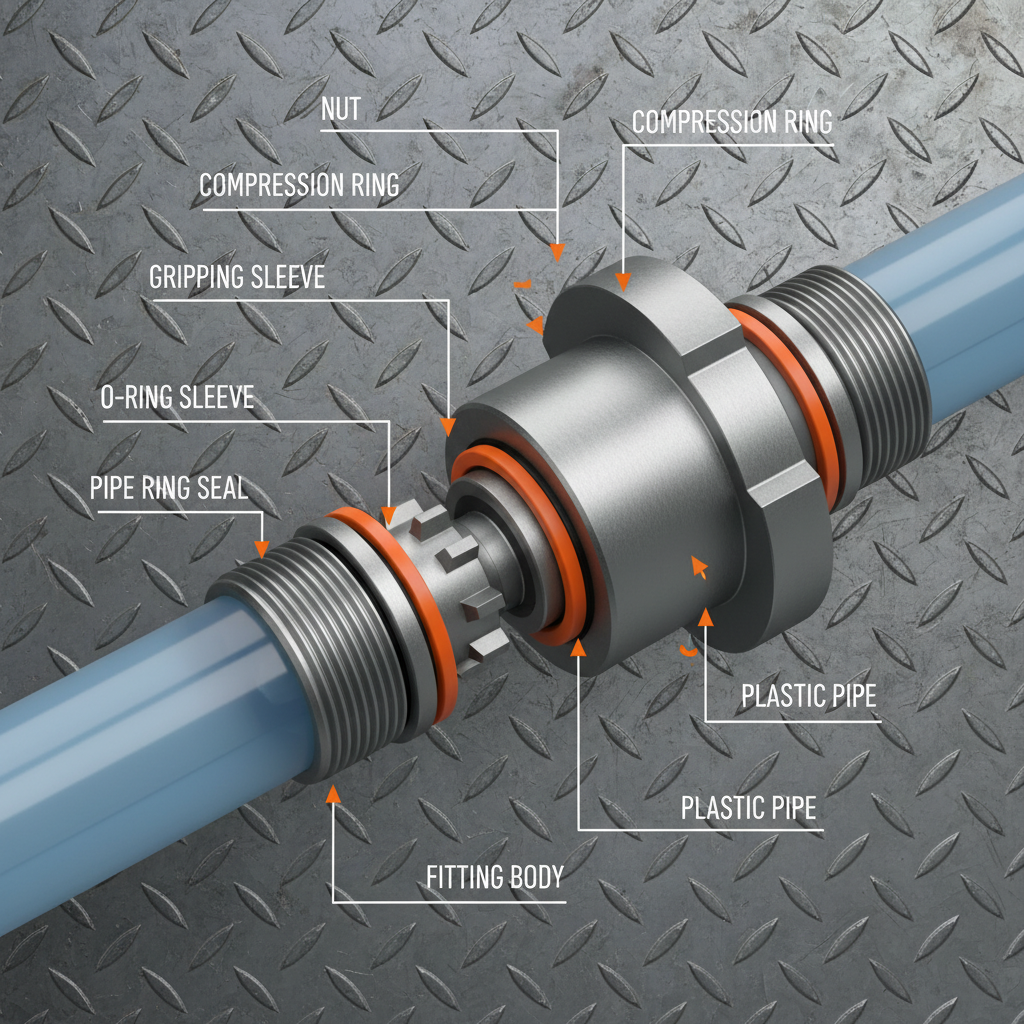
In simple technical terms, a compression fitting on plastic pipe is a device that joins two pipes or a pipe and a valve by compressing a sealing element (usually an O-ring or a ferrule) against the outer diameter of the pipe. This mechanical compression creates a tight, watertight seal that relies on the elastic deformation of the plastic pipe and the gasket, ensuring that fluid cannot escape even under significant pressure.
This mechanism is fundamentally different from thermal fusion. While fusion melts the plastic to create a homogenous joint, compression relies on physical force applied via a nut. This makes the process reversible; a technician can loosen the nut and remove the pipe for modification or replacement, a feature that is critical in industrial environments where system layouts frequently evolve.
From a humanitarian perspective, this "tool-less" or "minimal-tool" approach allows NGOs and relief organizations to set up potable water systems in minutes. The simplicity of the compression fitting on plastic pipe means that local workers can be trained quickly, empowering communities to maintain their own water security without relying on expensive foreign specialists.
Core Components and Material Synergy
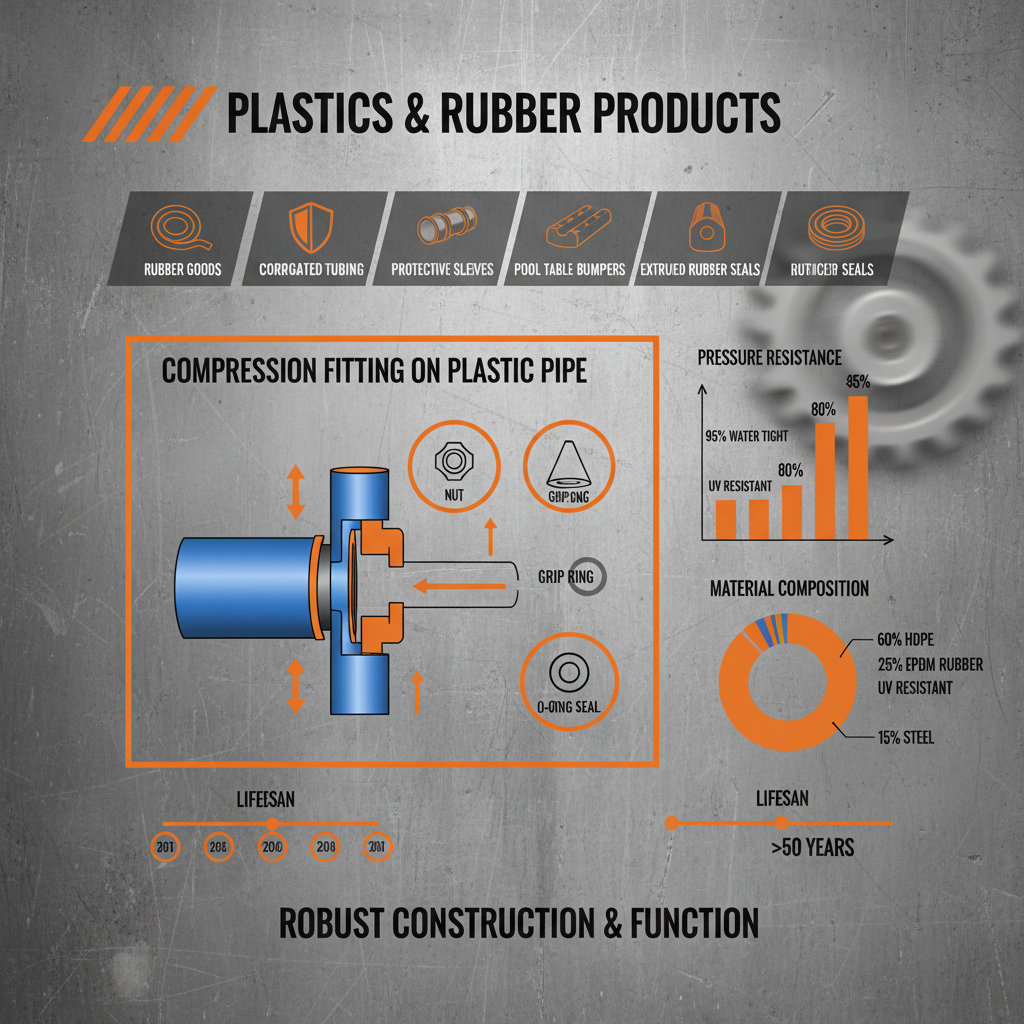
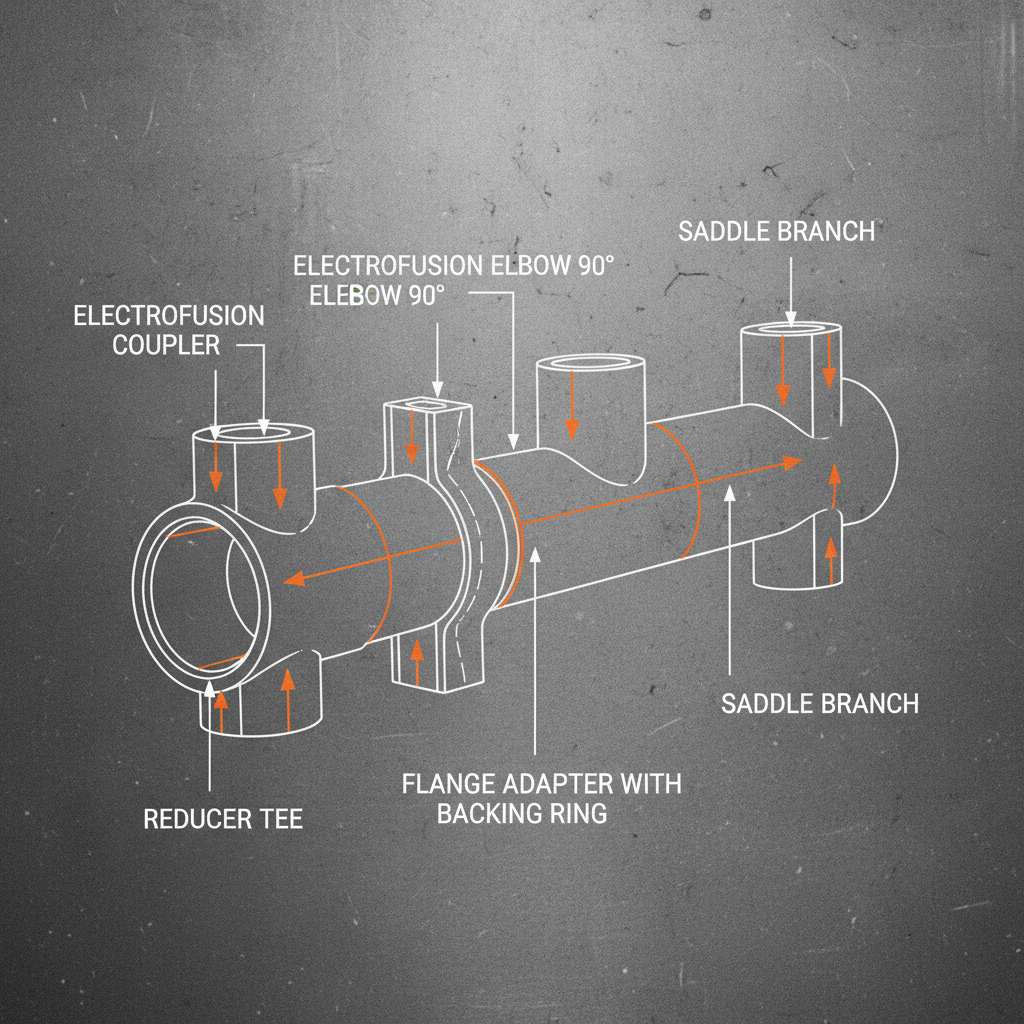
The effectiveness of a compression fitting on plastic pipe depends on the synergy between three primary parts: the body, the compression nut, and the gripping ring (or O-ring). The body provides the structural housing, while the nut applies the axial force necessary to squeeze the seal.
Material selection is paramount. For a compression fitting on plastic pipe to succeed, the O-ring must be chemically compatible with the fluid being transported—such as EPDM for water or Viton for aggressive chemicals. If the material of the fitting body is not matched to the pipe's expansion coefficient, temperature swings could lead to premature leaks.
Furthermore, the gripping ring ensures that the pipe does not slide out of the fitting when subjected to internal pressure. This mechanical lock, combined with the radial seal of the O-ring, creates a redundant safety system that makes the compression fitting on plastic pipe a preferred choice for high-vibration environments like industrial machinery rooms.
Performance Metrics and Efficiency Analysis
When analyzing the performance of various joining methods, the compression fitting on plastic pipe consistently scores high in terms of installation speed and versatility. Unlike adhesive bonding, which requires specific curing times and weather conditions, compression joints are immediate.
The primary trade-off often involves the maximum pressure rating compared to fused joints. However, modern engineering has pushed the boundaries, allowing many compression systems to handle pressures that exceed the burst strength of the plastic pipe itself.
Comparative Performance of Piping Join Methods
Industrial Applications and Field Use Cases
In the agricultural sector, the use of a compression fitting on plastic pipe is standard for drip irrigation systems. Farmers can easily expand their lines or move piping according to seasonal crop rotations without needing to rebuild the entire network. This flexibility leads to higher water efficiency and lower labor costs.
In the chemical processing industry, these fittings are often used for temporary bypass lines. Because they can be installed and disassembled rapidly, engineers can reroute fluids during maintenance cycles without compromising the containment of hazardous materials, provided the fitting materials are chosen for chemical resistance.
Long-Term Value and Sustainability Benefits
The long-term value of utilizing a compression fitting on plastic pipe extends beyond simple installation speed. From a sustainability standpoint, these fittings reduce the carbon footprint associated with construction. By eliminating the need for heavy fusion machinery and high-energy heating elements, the installation process is significantly "greener."
Furthermore, the reusability of compression fittings aligns with the principles of a circular economy. When a system is decommissioned or upgraded, the fittings can often be salvaged, cleaned, and reused, reducing the amount of plastic waste entering landfills. This contrast to solvent-welded joints—which must be cut out and discarded—is a major selling point for eco-conscious firms.
Reliability also builds trust. When a facility knows that a leak can be fixed in minutes by simply tightening a nut or replacing an O-ring, the psychological stress on maintenance teams is reduced. This reliability ensures that critical processes remain online, protecting both the economic viability and the safety of the operational site.
Future Innovations in Plastic Piping Joins
As we look toward the future, the evolution of the compression fitting on plastic pipe is being driven by smart materials and automation. We are seeing the emergence of "intelligent fittings" equipped with sensors that can detect pressure drops or leakages in real-time, sending alerts to a centralized digital twin of the facility.
The integration of bio-based polymers is another trend. Future compression fittings will likely be made from reinforced carbon-neutral plastics that offer higher pressure ratings than current petroleum-based HDPE, while remaining fully recyclable. This shift will be supported by global policies aiming for net-zero industrial emissions.
Additionally, the rise of robotic installation is on the horizon. Precision-engineered compression fittings are being designed for robotic arms to install in hazardous environments—such as nuclear decommissioning sites or deep-sea mining—where human intervention is too risky.
Technical Comparison of Compression Fitting Specifications
| Fitting Material |
Pressure Rating (Bar) |
Installation Time |
Durability Score (1-10) |
| Polypropylene (PP) |
16 - 20 |
Very Fast |
7 |
| Polyethylene (PE) |
10 - 16 |
Very Fast |
6 |
| Stainless Steel (on Plastic) |
40 - 60 |
Moderate |
10 |
| Brass (on Plastic) |
25 - 35 |
Moderate |
9 |
| Reinforced Nylon |
20 - 30 |
Fast |
8 |
| Composite PVC |
12 - 18 |
Fast |
7 |
FAQS
No, compression fittings are designed for specific pipe materials. For example, a fitting designed for HDPE may not seal correctly on a PEX pipe due to differences in wall thickness and elasticity. Always verify that the fitting material and the O-ring are compatible with both the pipe material and the fluid being transported.
The most common cause of leaks is a crooked pipe insertion. Ensure the pipe is cut square and deburred to avoid damaging the O-ring. Push the pipe fully through the gripping ring until it hits the stop, then tighten the nut firmly—but avoid over-tightening, which can deform the plastic pipe and actually create a leak path.
It depends on the application. Heat-fused joints are generally stronger and more permanent, making them ideal for high-pressure mains. However, compression fittings offer unmatched speed, ease of repair, and reusability, making them superior for temporary lines, agricultural use, and areas where specialized equipment is unavailable.
Over-tightening can lead to "stress cracking" or deformation of the plastic pipe wall. If the pipe is squeezed too hard, it may lose its circular shape, which prevents the O-ring from sealing uniformly against the surface. This often results in slow drips that are difficult to stop without replacing the damaged section of the pipe.
Only if the materials are specifically rated for it. Standard PP or PE fittings have temperature limits. For high-temperature applications, you should look for fittings with Viton or PTFE seals and metal bodies (like stainless steel) that can withstand thermal expansion without losing the compression grip on the plastic pipe.
Simply unscrew the compression nut. Once the nut is removed, the tension on the gripping ring is released. You can then slide the fitting off the pipe. If the pipe has been severely deformed by the gripping ring, you may need to cut that small section of the pipe away and use a coupling to join the remaining ends.
Conclusion
In summary, the implementation of a compression fitting on plastic pipe provides an optimal balance of efficiency, reliability, and versatility. By utilizing mechanical force rather than chemical or thermal bonds, these systems allow for rapid deployment and easy maintenance, which are critical in today's fast-paced industrial and humanitarian landscapes. The synergy between high-grade polymers and precision engineering ensures that fluid transport remains secure across a wide array of environmental conditions.
Looking forward, as the industry moves toward smarter, more sustainable infrastructure, the role of compression technology will only expand. We encourage engineers and procurement managers to prioritize materials that offer both high pressure ratings and environmental compatibility to ensure long-term system viability. For those seeking professional-grade solutions in plastic and rubber parts, we invite you to explore our expertise. Visit our website: www.fygasketfactory.com