


Regional Analysis
The Rubber and Plastic Components Market in Egypt
Understanding the intersection of geographic challenges and industrial growth in the North African region.
Egypt's industrial landscape is characterized by a diverse mix of legacy manufacturing and rapid modernization. The region's economy relies heavily on automotive assembly, agricultural machinery, and energy infrastructure. However, the geographic reality—combining intense heat, high salinity in coastal areas, and abrasive sand—places immense stress on sealing components. Consequently, there is a growing demand for high-specification rubber and plastic parts that can maintain integrity under these extreme environmental conditions, moving away from generic, low-cost alternatives toward engineered solutions.
Current market trends show a significant shift toward specialization. Industries such as food processing and medical device manufacturing in Egypt are increasingly requiring materials that comply with strict hygiene and biocompatibility standards. Simultaneously, the expansion of railway and bridge infrastructure is driving a need for heavy-duty hdpe fittings and extrusion parts that can withstand high pressure and variable loads. This transition is being accelerated by a broader push toward international standardization, where local companies seek partners who can provide certified, traceable components.
The primary opportunity for growth lies in the "customization gap." While generic parts are abundant, there is a critical shortage of suppliers capable of rapid R&D for specialized formulations. The constraint remains the technical ability to balance material cost with long-term durability in the Egyptian climate. The outlook is positive, as the regional move toward "Industry 4.0" and increased investment in the Suez Canal Economic Zone will likely increase the volume of high-precision rubber and plastic parts required for advanced logistics and manufacturing hubs.
Industry Journey
Evolution of Industrial Sealing Technology
From simple gaskets to high-performance engineered polymer systems.
Early Stage
Generic Molding
Industry relied on basic rubber molding with limited material options, leading to frequent failures in high-temperature or corrosive environments.
Growth Phase
Material Specialization
The introduction of synthetic elastomers and HDPE allowed for better chemical resistance and durability in specialized industrial applications.
Modern Era
Precision Engineering
Integration of CAD design, IATF certification, and custom formulation research to create high-end, failure-resistant sealing systems.
From Standard to Custom
The industry has moved away from "off-the-shelf" components. Modern operators now demand tailored solutions where the rubber hardness, elasticity, and thermal range are precisely matched to the operational environment to maximize equipment uptime.
Certification-Driven Sourcing
Quality assurance is no longer optional. The requirement for ISO and IATF certifications ensures that components are manufactured under a controlled system, reducing the risk of batch-to-batch variance in critical automotive and aviation parts.
Hybrid Material Integration
Recent developments focus on combining different materials—such as metal-reinforced rubber—to create parts that offer both the structural strength of metal and the sealing properties of elastomers, essential for high-pressure fittings.
Future Outlook
Emerging Trends in Rubber and Plastic Manufacturing
Technological shifts driving the next generation of industrial components.
Advanced Polymer Synthesis
Development of next-gen elastomers that offer extreme temperature stability (up to 300°C) and immunity to aggressive industrial solvents, crucial for energy sector upgrades.
Sustainability & Circularity
Integration of recyclable thermoplastics and biodegradable rubber alternatives to meet new environmental regulations in the Egyptian and European markets.
Smart Sealing Systems
Exploring the embedding of sensors within rubber components to monitor wear and tear in real-time, enabling predictive maintenance for heavy machinery.
Additive Manufacturing
Use of 3D printing for rapid prototyping of complex pvc tube fittings, drastically reducing the time from design to installation.
The convergence of these trends is leading toward a "Precision-First" paradigm. In Egypt, where infrastructure projects are scaling rapidly, the ability to provide components that are not only durable but also mathematically precise is becoming a key competitive advantage. This shift is particularly evident in the automotive sector, where tighter tolerances are required to improve fuel efficiency and reduce noise, vibration, and harshness (NVH).
Furthermore, the global push for carbon neutrality is influencing the choice of raw materials. We are seeing an increase in demand for low-VOC (Volatile Organic Compound) materials and energy-efficient production processes. By optimizing the curing cycle and reducing material waste during the extrusion of plastic parts, manufacturers can lower their environmental footprint while maintaining the rigorous quality standards required by international clients.
Practical Application
Deployment Scenarios Across Egypt's Key Industries
How our engineered components perform in real-world Egyptian operational environments.
01
Automotive Assembly Plants in Cairo and Alexandria
In high-volume assembly lines, precision rubber seals are critical for preventing fluid leaks in engine compartments. Given the dusty environment and extreme heat of urban Egypt, components are engineered with enhanced abrasion resistance and thermal stability to ensure that vehicle seals do not degrade during the initial years of operation, reducing warranty claims for manufacturers.
02
Agricultural Irrigation Systems in the Delta Region
Irrigation infrastructure requires pvc pipe parts that can withstand constant exposure to UV radiation and fluctuating water pressure. By utilizing high-density polyethylene (HDPE) and UV-stabilized PVC, we provide fittings that resist brittleness and cracking, ensuring long-term water efficiency for large-scale farming operations.
03
Aviation Maintenance Facilities at Cairo International Airport
Aviation components demand the highest level of certification and tolerance. We provide custom-molded rubber seals for hydraulic systems that meet strict aerospace standards. These parts are designed to handle extreme pressure differentials and temperature swings between ground level and cruising altitude, ensuring safety and operational reliability.
04
Food and Beverage Processing Plants in Giza
Hygiene is paramount in food production. We supply food-grade rubber and plastic seals that are resistant to frequent steam cleaning and caustic detergents. These components prevent bacterial growth in joints and valves, ensuring that Egyptian food exporters can meet stringent EU and US FDA safety requirements.
05
Railway Bridge Infrastructure Projects across the Nile
Heavy-duty structural seals are required for bridge bearings and railway expansion joints. We provide specialized high-load rubber components that absorb vibrations and accommodate thermal expansion. These parts are formulated to resist the high alkalinity of concrete and the corrosive effects of moisture, ensuring the structural longevity of national transport links.
Operational Evidence
Representative Industrial Use Cases
Illustrative perspectives on how precision sealing improves operational efficiency.
In high-temperature industrial settings, the transition to custom-formulated rubber seals drastically reduced the frequency of unplanned shutdowns. The ability to specify exact thermal resistance levels meant that leakages, which were previously common during summer peaks, were virtually eliminated.
Sourcing certified HDPE and PVC fittings that meet international tolerances has allowed us to streamline our assembly process. The precision of the parts removed the need for manual adjustments on-site, significantly accelerating project completion timelines for irrigation networks.
The importance of IATF 16949 certification cannot be overstated when dealing with automotive components. Having a partner who provides full traceability and consistent quality across large batches ensures that our final product meets the safety standards required for global export.
Our Heritage
GaoBeiDianShi Fengye: A Legacy of Precision
Decades of expertise in rubber and plastic sealing technology.
1985
Company Foundation
Established with a core focus on the custom processing of middle-to-high-end rubber and plastic sealing products, laying the groundwork for technical specialization.
Development Era
Technical Expansion
Expanded capabilities into formulation research and development of mixed rubber and the integrated design and production of precision tools.
Modern Phase
Global Certification
Achieved National High-tech Enterprise status and passed rigorous IATF 16949:2016 and ISO 9001/14001 certifications, expanding service to automotive and aviation sectors.
Present
Industrial Scaling
Now operating over 40,000 square meters with 8 production workshops and 120 employees, serving diverse global industries with high-precision custom solutions.
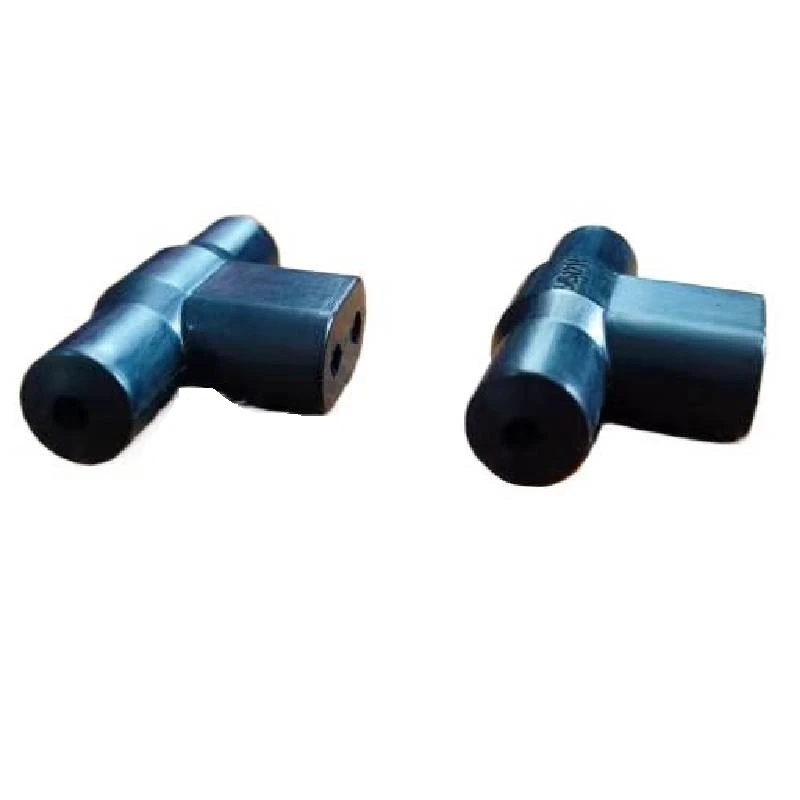
Triple Connector Adapter

Three Way Connector

metal-encapsulated rubber components

Accessory Hinges for Refrigerators
Knowledge Base
Frequently Asked Questions
Technical insights and procurement guidance for industrial sealing components.
What factors determine the best rubber material for high-temperature Egyptian environments?
The selection depends primarily on the peak operating temperature, the presence of UV radiation, and the chemicals the part will encounter. For extreme heat and UV exposure common in Egypt, we recommend silicone or EPDM formulations. We evaluate these needs by analyzing the specific application environment, then develop a mixed rubber formulation that prevents hardening and cracking, ensuring the seal maintains elasticity over its entire lifecycle.
How do custom HDPE fittings differ from standard PVC options in terms of durability?
High-Density Polyethylene (HDPE) generally offers superior impact resistance and flexibility compared to PVC, making it more suitable for underground installations and areas prone to soil movement. While PVC is excellent for rigid, chemical-resistant piping, HDPE's ability to withstand pressure surges without cracking makes it the preferred choice for large-scale irrigation and industrial fluid transport in variable terrains.
Can you manufacture rubber parts that meet IATF 16949 standards for the automotive sector?
Yes, we are fully certified under IATF 16949:2016. This means our entire production process—from raw material procurement and mixing to molding and final inspection—follows a strict quality management system designed specifically for the automotive industry. This ensures that every component has full traceability and meets the rigorous safety and performance tolerances required by global vehicle manufacturers.
What is the process for requesting a custom design for specialized metal or rubber parts?
The process begins with a technical consultation where we collect your dimensional drawings, material requirements, and environmental constraints. Our R&D team then creates a tool design and a material formulation sample. After your approval of the prototype and testing in our quality department, we move to full-scale production. This integrated approach ensures that the final product is optimized for your specific operational needs.
How do you ensure quality consistency across large batches of plastic extrusion parts?
Consistency is maintained through automated production technology and a dedicated testing department. We perform periodic sampling and dimensional checks during the extrusion process to ensure there is no deviation from the specified tolerance. By combining ISO 9001 quality standards with rigorous in-process monitoring, we guarantee that the first part produced is identical to the last part in the batch.
What lead times should we expect for customized sealing solutions shipped to Egypt?
Lead times vary based on the complexity of the tool design and the volume of the order. However, because we handle tool design and production in-house, we can significantly reduce the prototyping phase. Once the design is finalized, production schedules are optimized to ensure timely delivery via major ports. We recommend early technical coordination to align production with your project deadlines.
Expert Consultation
Ready to Optimize Your Industrial Sealing Infrastructure in Egypt?
Whether you are managing a large-scale automotive plant or upgrading critical water infrastructure in Egypt, precision matters. Our team of material scientists and tooling engineers is ready to help you resolve leakage issues and extend the life of your machinery through custom-engineered rubber and plastic components. Contact us today to discuss your technical requirements and request a professional consultation.
Discuss Your Requirements


